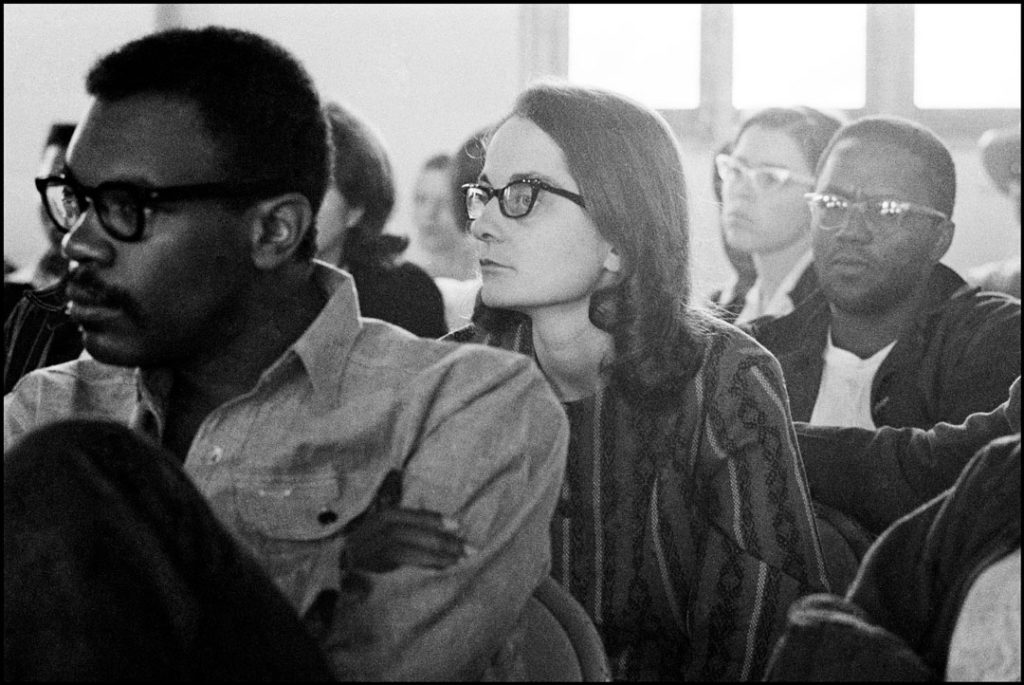
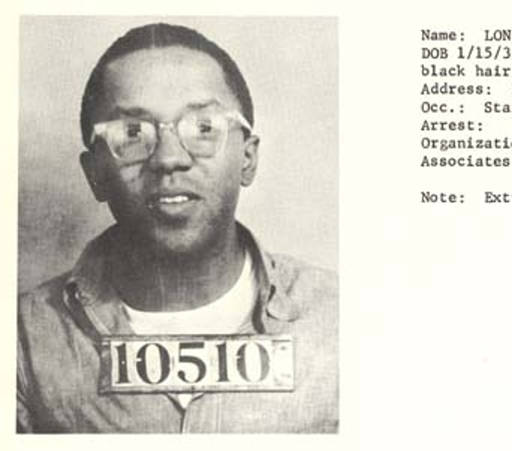
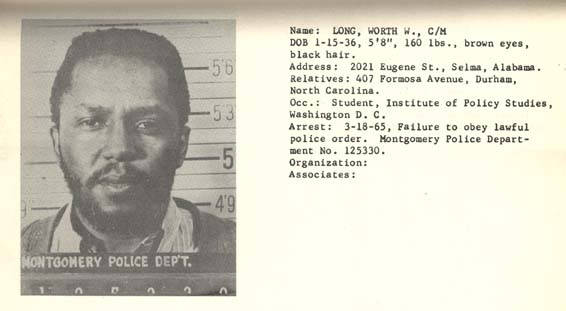
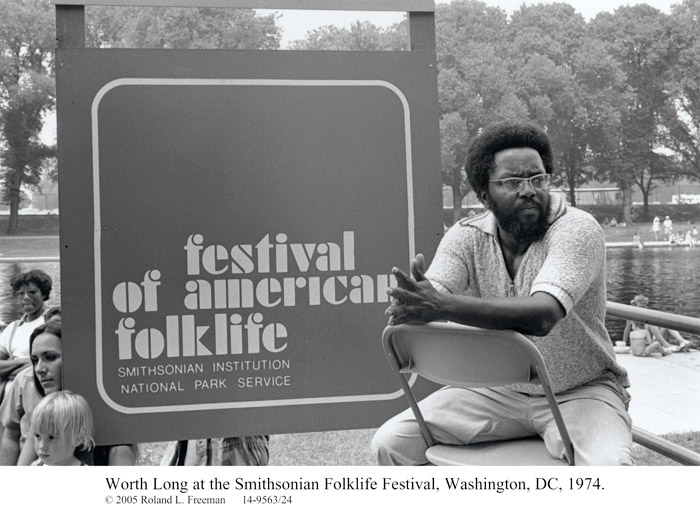
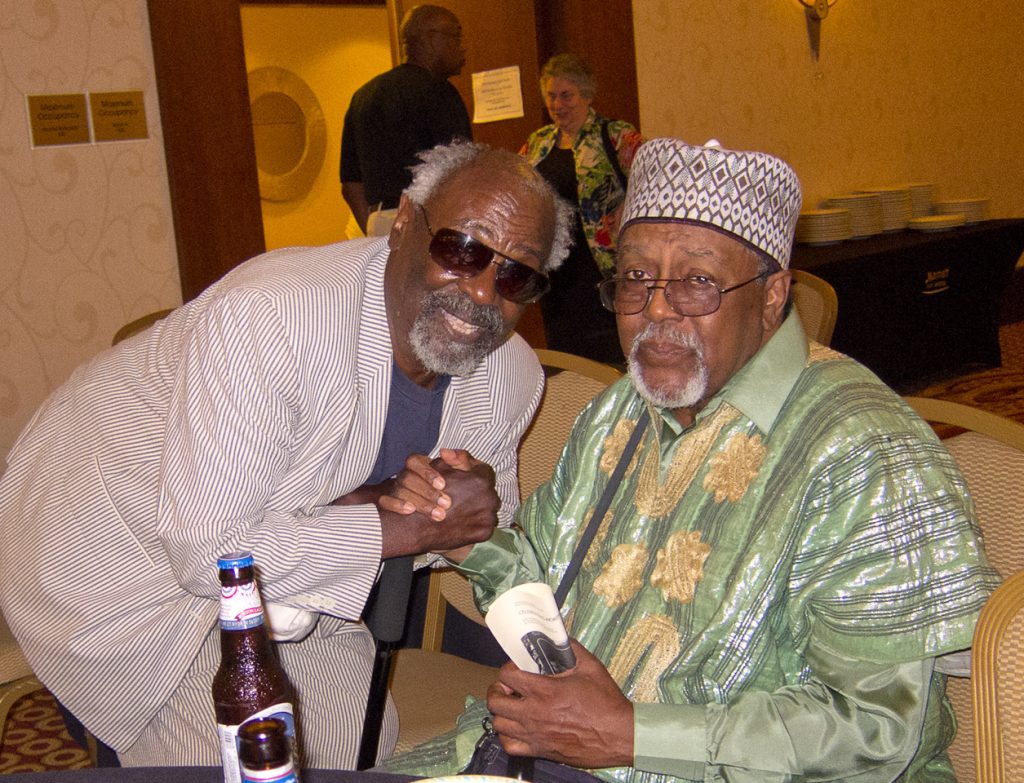
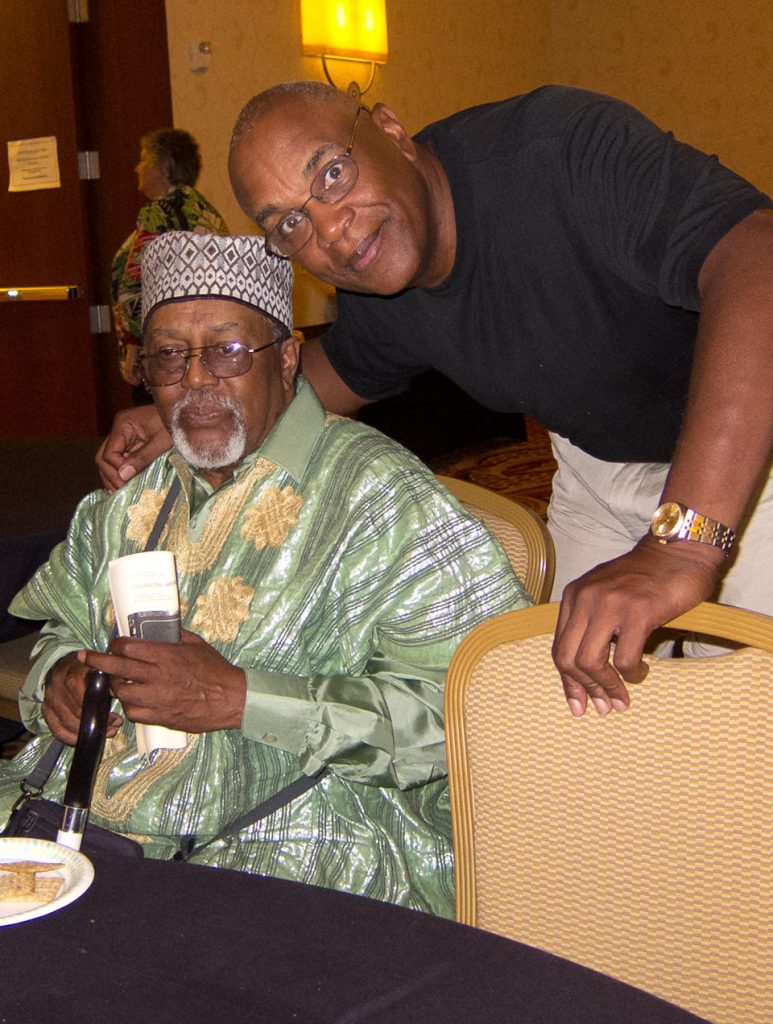
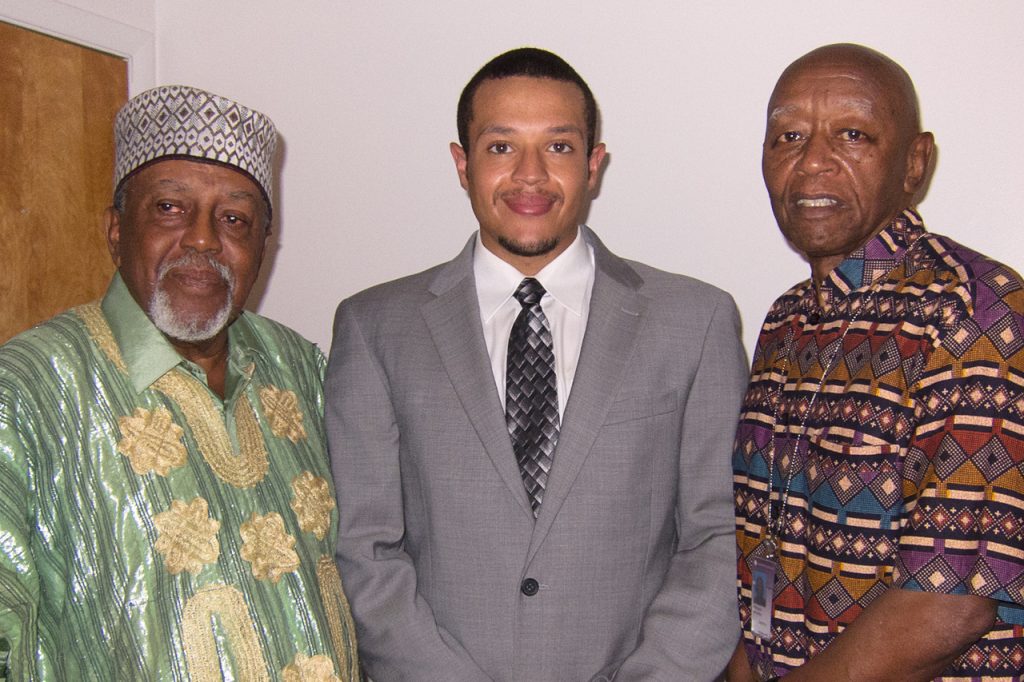
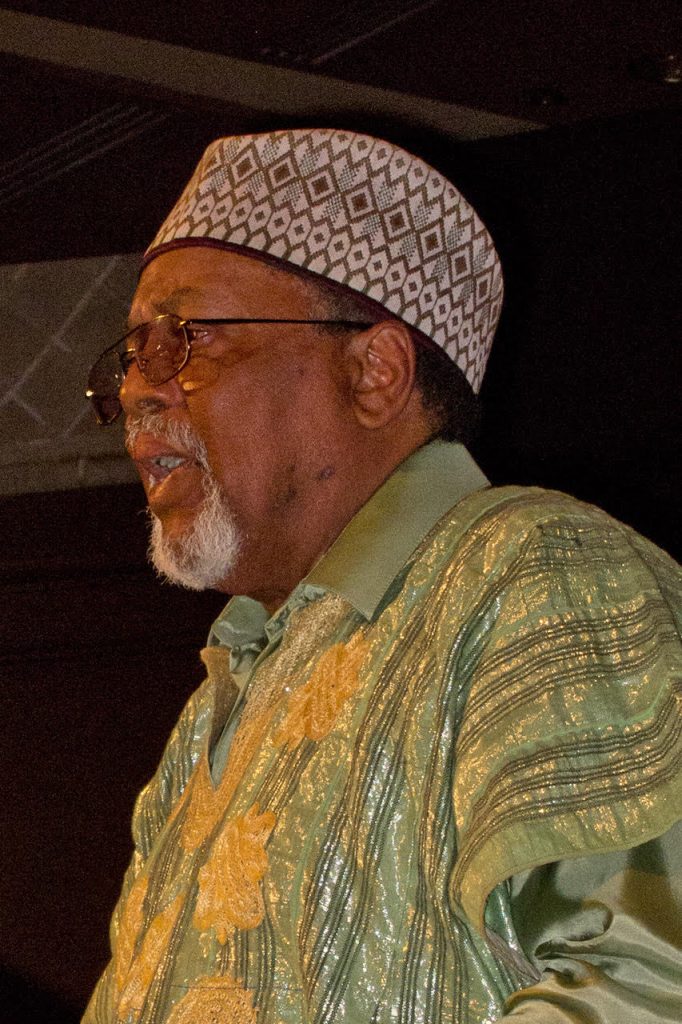
Worth Long
SNCC Veteran, Organizer, Musicologist, Folklorist
January 15, 1936 – May 8, 2025
Durham, North Carolina
It is only appropriate to begin with a few of Worth Long’s own words. Indeed, we don’t get enough of Worth’s words and that’s unfortunate — one of my favorites of his is “unviolent” rather than “nonviolent” to describe the tactics of the 1960s southern civil rights movement. But the words that I want to start with now were spoken at the ArtWorks conference of 1993 that was sponsored by the Mississippi Arts Commission and were part of his introduction of a little-known master of the slide guitar, Reverend Leon Pinson from northern Mississippi — Holly Springs I believe: “Very often people we don’t see as being very important are important to our traditions.” Worth Long has done so much for so long and so invisibly in so many instances that the temptation is to simply list his involvements so that everything can be put on the record. But I don’t have enough space for that and won’t do it. Suffice to say Worth has been too invisible for too long.
It is interesting that Worth’s life brings together two things that on the surface would seem to be contradictory: tradition and change. No, it is not just interesting, but important to understand. You see, what shapes Worth’s consciousness and his connection with these seemingly opposite poles is the tradition of civil rights struggle.
It was within the context of civil rights struggle that I first met Worth; actually heard of him before meeting him. Well before the now-famous Selma-to-Montgomery march of 1965 Worth was working in Selma, Alabama as a SNCC field secretary. I was working in the Mississippi delta. The year was 1963 and during one of a series of voter registration campaigns he was brutally beaten by a deputy sheriff. No one outside of movement folks was paying much attention to Selma then and all the official violence in that city went unnoticed and unremarked on.
Who’s this guy Worth Long? I wondered aloud from my spot with SNCC in the Delta. Somebody knew; I don’t remember who, but whoever it was explained that like so many of us, Worth had come out of the sit-in movement — in Worth’s case the movement that leapt off the campus of Philander Smith College in Little Rock, Arkansas. That campus movement which erupted just a month or so after the Greensboro students launched this phase of the southern freedom campaign, seemed crushed by local authorities who used arrests and official violence. It was Worth Long who breathed life back into it, taking a leadership role in that student movement. I wish Worth, and it is the same wish I have for so many movement veterans, had written about this. I still have not given up hope that he will. It is ironic, given Worth’s role in interviewing and recording the histories of so many in the movement — he was a key interviewer at the University of Southern Mississippi Center for Oral History and Cultural Heritage, the Tougaloo College (Mississippi) Civil Rights Documentation Project and played an important role as interviewer in the radio documentary Will the Circle Be Unbroken — we do not have his.
You have to think of Worth as — to use an old term that I still like — a “race man”, and again to use another old phrase that I like, a race man is best defined as someone totally committed to “the redemption and vindication of the race” — black race or human race, take your pick, they both work when it comes to Worth. My point here is that this commitment leads straight to culture and tradition. In many ways the 1960s civil rights movement is not fully understood. It was less a movement of mass protest in public spaces led by charismatic leaders than a movement that intensified the very old “tradition” of community organizing (Slaves, after all, were not picketing the plantation manor or marching on the auction blocks in protest; they were planning and organizing, plotting if-you-will — escape, revolt, whatever). SNCC’s idea, and I think the idea at the core of the southern freedom movement was that people have the right to have some say-so in the decision-making that affects their lives. That requires an organizing effort as well as protest–more than protest, in fact. One of the striking things about the movement of the 1960s was that people who were usually spoken for by sympathetic advocates — sharecroppers, maids, day workers, etc. — began speaking for themselves. Listening to ordinary people, understanding ordinary lives became key to civil rights organizing. Worth was good at it. So it is no surprise and quite logical, actually, that over the years Worth would also evolve as a significant figure in blues scholarship and the cultural life of southern black America — again without nearly enough credit. How much weaker would Alan Lomax’s Land Where Blues Began (book and film) have been without Worth?
Song is intimately related to the black tradition of community organizing. I intend no lecture on the point here but think of the song “Follow the Drinking Gourd”. And with song comes the Word. So we cannot be surprised at finding Worth Long the poet.
I will make one final point and then ruthlessly shut myself down. I think it is important that Worth is a southerner. It is a question of sensibility. I think, and many will argue with me on the point, that despite the inflated so-called sophisticated urbaneness of the United States it is still in the South that we get to the core. Worth is from Durham, North Carolina, once the site of great black enterprise in one of the great black communities: “Hayti”. It has been destroyed now by interstate highways, university expansion and not-so-benign neglect. But the powerful interplay of that community’s tradition, its standard of “up ye mighty race”, is a tradition still reflected in Worth’s life.
— Charlie Cobb
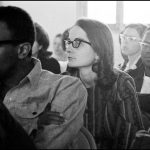
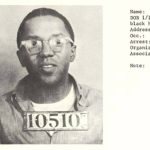
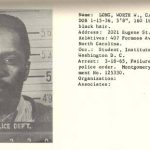
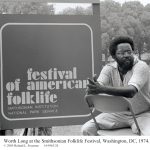
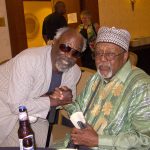
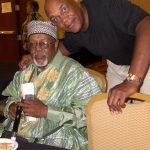
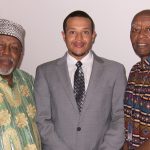
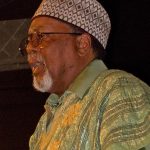
“My role as an organizer—community and cultural—is basically to give people an option. Powerlessness is basically having no option.”
—Worth Long
Read more about Worth Long
Smithsonian Center for Folklife and Cultural Heritage
Roland Freeman & Worth Long
Worth Long made history, then recorded it
Civil rights veteran later celebrated, preserved folklore and folk music.
By Rebecca McCarthy For the AJC
The Land Where the Blues Began (1979)
Emilye Crosby, “Celebrating Worth Long’s Legacy,” June 12, 2012, Smithsonian Center for Folklife and Cultural Heritage.
Our Voices: Song & Music, featuring Candie Carawan, Bettie Mae Fikes, Worth Long, Charles Neblett, and Hollis Watkins, SNCC Digital Gateway Website.
Our Voices: Roots of Organizing, featuring Worth Long and Maria Varela, SNCC Digital Gateway Website.
Our Voices: Emergence of Black Power, featuring selections from the SNCC Critical Oral Histories Conference, July 2016, Duke University.
Worth Long, “Cultural Organizing and Participatory Research,” The Arts of Black Folk: The Arts of Black Folk Conference for Community Organizations (New York: Schomburg Center for Research in Black Culture, 1991), 28-35.
Molly McGehee, “You Do Not Own What You Cannot Control: An Interview with Activist and Folklorist Worth Long,” Mississippi Folklife (Fall 1998), 12-20.
Sarah Riva, “Desegregating Downtown Little Rock: The Field Reports of Bill Hansen, October 23-December 3rd, 1962,” Arkansas Historical Quarterly, (Autumn 2012).
Interview with Charles Bonner and Bettie Mae Fikes by Bruce Hartford, 2005, Civil Rights Movement Veterans Website.
Visit the Digital Sources for Worth Long
https://snccdigital.org/people/worth-long/